
In our coastal rhythms, where the sun rises with promise and sets with reflection, food is more than sustenance it is ritual. One Meal a Day (OMAD) is not merely a diet; it is a vow of simplicity, a meditation on restraint, and a celebration of nourishment in its purest form.
The Philosophy of OMAD

OMAD asks us to compress abundance into a single offering.
It is the art of saying: “I will feast once, but with intention.”
By fasting through the day, the body learns patience, the mind finds clarity, and the spirit embraces discipline.
The Promise
- Lightness of Being: As the body burns stored energy, weight finds balance.
- Clarity of Thought: Long hours without distraction sharpen focus.
- Simplicity of Life: One meal, one ritual, one pause in the day.
The Caution

Yet, OMAD is not for all.
- A single plate must carry the weight of all nutrients.
- The digestive fire must be strong enough to handle abundance at once.
- Those with medical needs, children, or expecting mothers should not walk this path without guidance.
The Sacred Plate

When the hour of eating arrives, let the plate be a prayer:
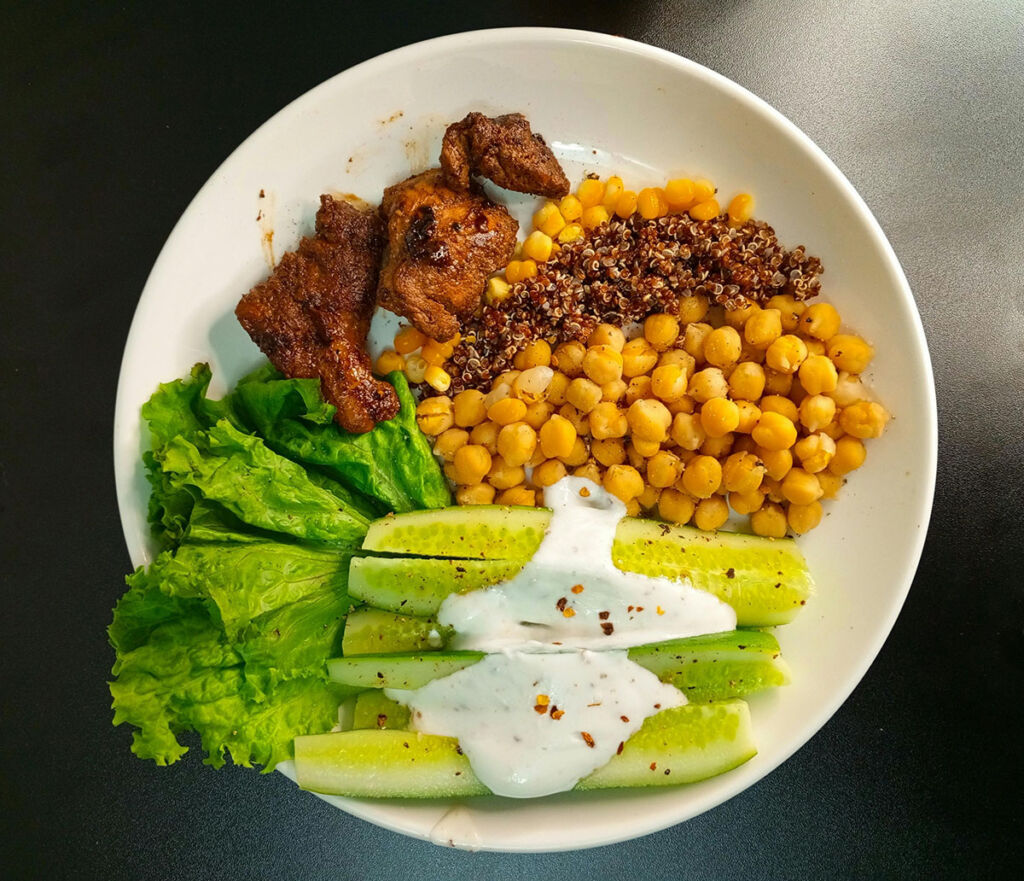
- Protein for strength—chicken, fish, legumes.
- Greens for vitality—leafy soups, fresh salads.
- Fruits for sweetness—papaya, guava, melon.
- Fats for balance—a spoon of ghee, a handful of nuts.
Each bite becomes a hymn to health, each flavor a reminder of balance.
OMAD in Our Culture

In Karnataka’s coastal homes, fasting has always been woven into festivals, rituals, and wellness. OMAD is a modern echo of that ancient wisdom—discipline dressed in contemporary science. It is not deprivation, but devotion; not hunger, but harmony.
Closing Thought

OMAD is a journey of one plate, one pause, one promise.
It teaches us that fullness is not in frequency, but in intention.
As you walk this path, let your meal be mindful, your fast be graceful, and your health be celebrated.